
A rose’s quality doesn’t end at harvest — it depends just as much on what happens between the farm and your door. For wholesale buyers, florists, and event planners sourcing fresh-cut roses internationally, cold chain logistics is one of the most important, and most overlooked, parts of the process. At Flor Hermosa, our roses travel from our farm in Tabacundo, Ecuador, to destinations worldwide through a carefully managed cold chain designed to preserve freshness every step of the way.
What Is Cold Chain Logistics?
Cold chain logistics refers to the uninterrupted, temperature-controlled process used to transport perishable goods, like fresh-cut roses, from origin to final destination. For roses, this means maintaining consistently cool temperatures from the moment they’re harvested through grading, packing, air or ground transport, customs clearance, and final delivery. Any break in that cold chain — even a few hours of exposure to heat — can significantly shorten a rose’s vase life before it even reaches the buyer.
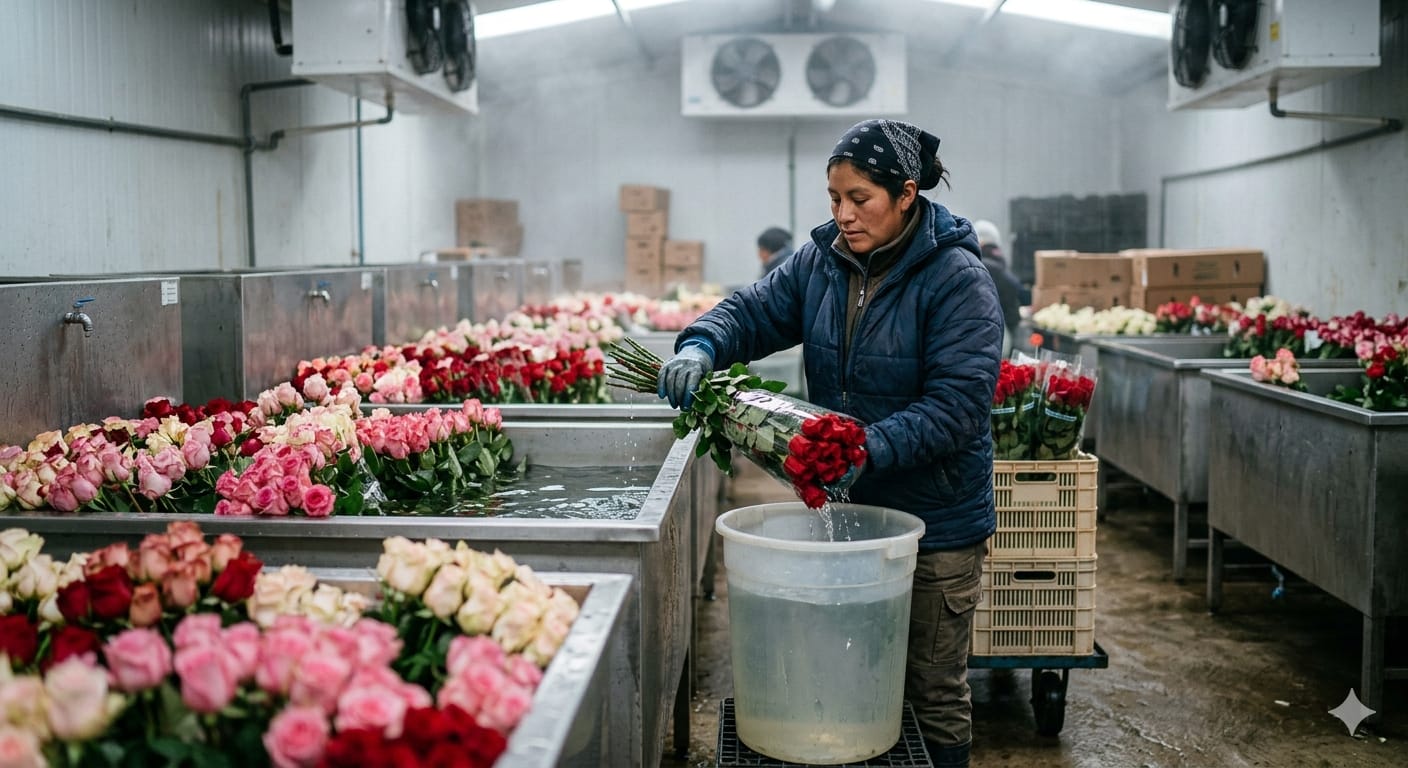
Step 1: Cleaning, Classification, and Cooling Room
Once roses are hand-harvested at peak bloom, they undergo an initial cleaning process to remove debris, leaves, and imperfections, followed by classification by stem length, bloom size, and color. Roses are then placed in a cooling room maintained between 2°C and 3°C, where they undergo hydration process. This combination of low temperature and controlled hydration halt the natural aging process. Preserving cellular integrity before the roses move further down the cold chain.
Step 2: Packing in Controlled Conditions
After cooling, roses are carefully packed using methods designed to protect each stem while maintaining a stable environment, with packing areas kept between 8°C and 10°C. Packing materials and box design also play a role, helping insulate roses during the transport stages ahead.
Step 3: Refrigerated Transport to Export
From our farm, roses move through refrigerated trucks maintained between 5°C and 8°C to keep temperatures consistent en route to the airport or shipping point. Temperature consistency here prevents the kind of fluctuation that can cause premature blooming or wilting before roses even leave Ecuador.
Step 4: Air Freight Under Temperature Control
Most fresh-cut rose exports travel by air freight, often in temperature-controlled cargo holds, to minimize transit time and maintain freshness across long distances. Speed matters here — the shorter the time between harvest and arrival, the longer the vase life buyers can expect.
Step 5: Customs and Final-Mile Delivery
Once roses clear customs at their destination, maintaining the cold chain through final-mile delivery is just as important as the international leg of the journey. Delays or temperature lapses at this stage can undo the careful handling from every previous step.
Why This Matters for Your Business ?
For florists and wholesale buyers, a well-managed cold chain translates directly into measurable business benefits: longer vase life, fewer damaged or wilted stems on arrival, and more consistent quality across every order. Roses that travel through a properly maintained cold chain can offer 10 to 14 days of vase life, compared to far shorter spans when temperature control breaks down anywhere along the way.
Built Into Every Flor Hermosa Order
At Flor Hermosa, cold chain handling isn’t an afterthought — it’s built into every stage of our process, from our fields in Tabacundo to your final destination. Combined with our high-altitude growing conditions, this attention to logistics is part of what allows us to deliver export-quality, fresh-cut roses that arrive ready to perform, whether for wholesale distribution, retail, or wedding and event work.
Want to learn more about how we handle your order from farm to delivery? Request a quote on WhatsApp or browse our rose catalog to start planning your next order.
Disclaimer: Some images in this post were generated with AI for illustrative purposes and may not depict our actual farm, facilities, or logistics process exactly.